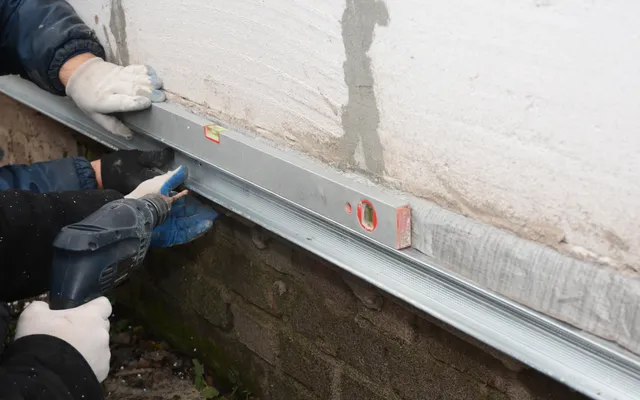
Signs of Slab Foundation Problems
Slab movement can affect the entire structure above it. Common signs include:
- Cracks in tile, concrete, brick, or drywall
- Doors and windows that stick
- Uneven or sloping floors
- Gaps around exterior trim or window frames
- Separation at expansion joints
- Cracks around garage floors or patios
- Soil pulling away from the slab edge
- Water collecting near the foundation
- Plumbing issues or unexplained moisture
If several of these signs appear together, schedule an inspection.
What Causes Slab Foundations to Move?
Slab foundations depend on stable support from the soil below. When soil expands, shrinks, washes out, or loses bearing strength, sections of the slab can move.
Common causes include:
- Expansive clay soil
- Drought and soil shrinkage
- Heavy rain and poor drainage
- Plumbing leaks beneath the slab
- Tree roots removing moisture from nearby soil
- Erosion or voids under the concrete
- Poor compaction before construction
The best repair method depends on whether the slab is settling, heaving, cracking, or losing support from below.
Slab Foundation Repair Options
Slab repair may include:
- Foundation piers to stabilize settled areas
- Slab lifting or leveling where appropriate
- Void filling beneath unsupported concrete
- Crack repair after stabilization
- Drainage correction to reduce moisture problems
- Plumbing leak coordination if water is contributing to movement
- Ongoing monitoring when movement is minor
A strong repair plan should focus on stabilization, not just cosmetic crack patching.
What Happens During a Slab Foundation Inspection?
During a slab inspection, we look for visible movement, measure interior elevations, review drainage patterns, check the slab perimeter, and look for signs that soil or water may be affecting the foundation.
We then explain:
- Whether the slab appears to be moving
- Which areas are affected
- Whether drainage or plumbing may be involved
- Whether repair or monitoring is recommended
- Which repair method may be appropriate